
| Name | Inge Lamina Spreader |
| Lead Time | 0-3 days |
| Competitor | ;BV297R;MB989R;OS1316;0801806;080-1806;GS40.3170;GS403170;290152;290-152;74165060;741-6506-0;210293;575505;57-5505;612516;61-2516;26-2000;KM48-217;VM842136;262000;KM48217;5755-05;290150;290-150;575504;57-5504;612515;61-2515;5755-04;BV298R;OS1317;74195030;741-9503-0;575506;57-5506;5755-06;OS1315;VM842139;VM84-2139;0801806s;080-1806s;290153;290-153;575509;57-5509;KM48218;KM48-218;5755-09;5755-05_5755-09; |
| Specialty | Neuro, Ortho & Spine-Retractors |
| Material Finish | Stainless Steel |
| Grade | Premium Operating Room |
| Units of Measurement | Each |
| Manufacturer | Ophthalmic Zone |
| Sterility | Non-Sterile |
| Usage | Reusable |

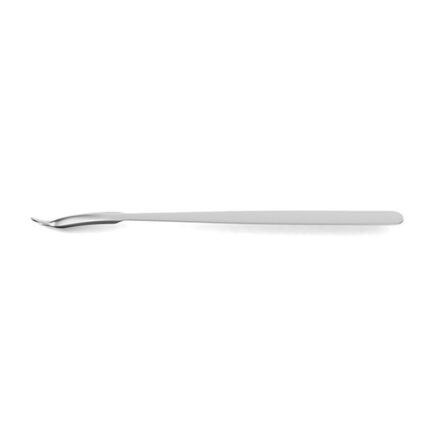
Inge Lamina Spreader
jaws open to 1-1/2″ Inge Lamina Spreader is an ideal instrument for use in orthopedic spinal surgeries. This instrument is specially designed to be inserted between the lamina of the spinal cord and gently spread it apart in procedures such as laminectomies. These jaws open to 1.5″ and features serrated handles for a comfortable, no slip grip as well as a gently curve that keeps the instrument handle out of the surgical field. Additionally it is available in three lengths 6.25″, 9.5″ and 10″ all with
Description
Reviews (0)
Related products
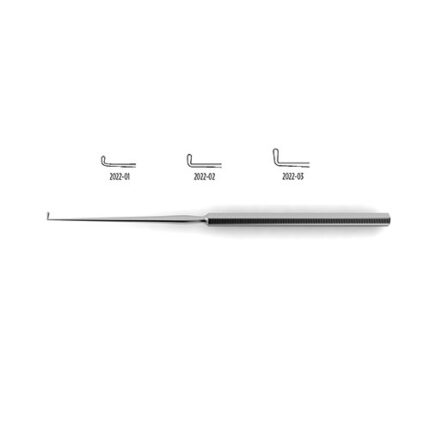
Adson Dura & Nerve Hook
3.0 mm tip, 8" (20.0 cm) Adson Dura & Nerve Hook is crafted for use in a wide variety or neurosurgical procedures. This hook is a multipurpose instrument that can be used to retract nerves but can also be used to retract the dural layer of the meninges during craniotomies and spinal surgeries. Additionally this instrument is available with either a sharp or blunt tip making it suited for retraction of very delicate tissue matter with the blunt tip or less sensitive tissue with the sharp tip.

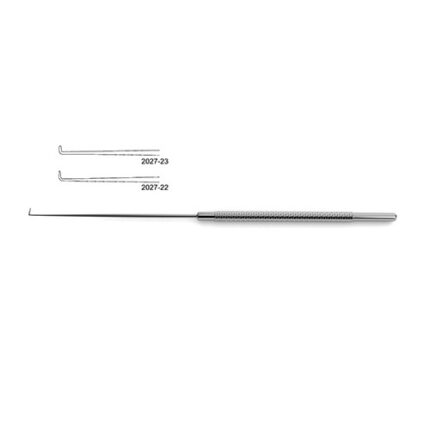
Aufranc Cobra Retractor
10.0 mm tip, 10-1/2" (26.5 cm)Aufranc Cobra Retractor is a uniquely designed instrument for use in retraction and elevation of spinal roots. This retractor can be used in many different neurosurgical procedures but is especially useful in spinal surgeries. It features a cobra shaped head which gives it a contour well suited for maneuvering in the vicinity of nerve roots and keeping them protected. Additionally this retractor is available in four different tips making it well suited for any procedure: serrated pointed tip, smooth pointed tip, serrated blunt tip, smooth blunt tip.
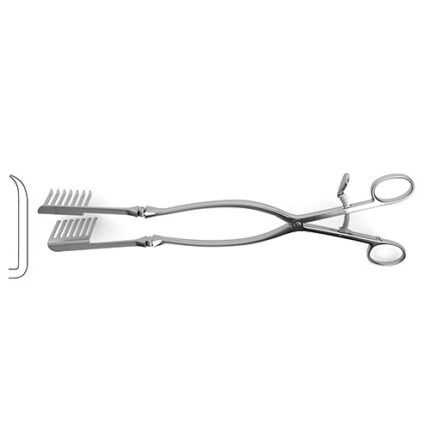
Beckmann-Eaton Laminectomy Retractor
hinged arms, 7x7 prongs, 12-1/2" (32.0 cm) Beckmann-Eaton Laminectomy Retractor is designed for use in neurosurgical laminectomy procedures. In order to perform this procedure the soft tissue and muscle layer directly atop of the spinal need to be incised through and retracted. This instrument features hinged arms and 7x7 prongs that allow gentle but effective retraction that gives direct access to the surgical field. This retractor is available either with either sharp or blunt prongs making it a versatile instrument to satisfy any patient need or surgeon preference.
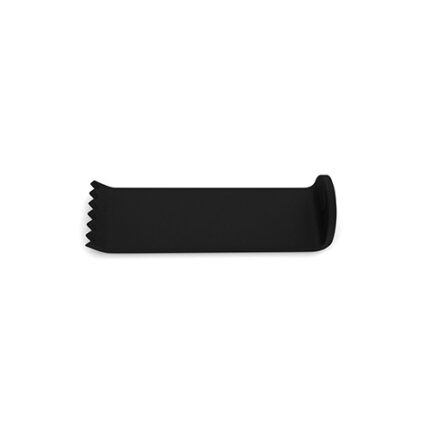
Carbon Fiber Radiolucent Lateral Blade
ball snap closure, w/ teeth Carbon Fiber Radiolucent Lateral Blade is an added component to be used alongside the cervical retractor for general purpose soft tissue retraction. All six blades are made from stainless steel and a ball snap closure making them a tight fit. Each blade also features teeth giving them added hold in retraction. They are available in variety of sizes making it possible to find a suitable blade for soft tissue retraction in a number of neurosurgical scenarios and approaches to the spinal cord. Additionally this instrument is radiolucent which allows it to be left in place during x-ray and can be seen through.
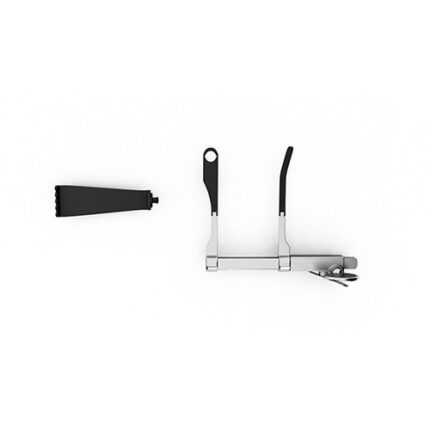
Caspar Type Counter-Retractor
Caspar Type Counter-Retractor is a specialized instrument made for retraction of soft tissue during neurosurgical procedures. This retractor is available as a frame with six different blades ranging from 35.0 mm to 60.0 mm in 5.0 mm increments. The variety of sizes of blades allows this retractor to be suitable for many different patients and surgeon preferences.
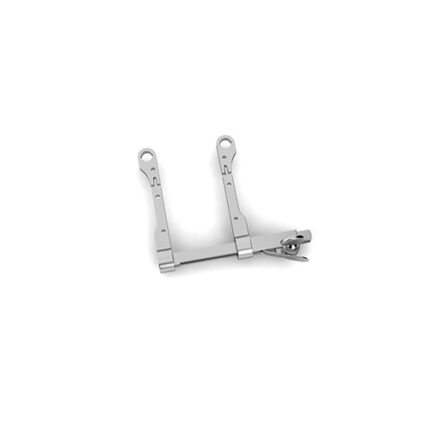
Cervical Retractor
9.0 cm spread, hinged frameCervical Retractor is ideally suited for use in retractor of soft tissue and muscle layers in neurosurgical spinal procedures. This instrument can be used at the cervical spinal level in procedures such as laminectomies or hemilaminectomies. Additionally it is available with either a rigid frame or a hinged frame making it more effective at fitting into a variety of different sized patients and opens to a spread of 9.0 cm giving clear access to the surgical field.
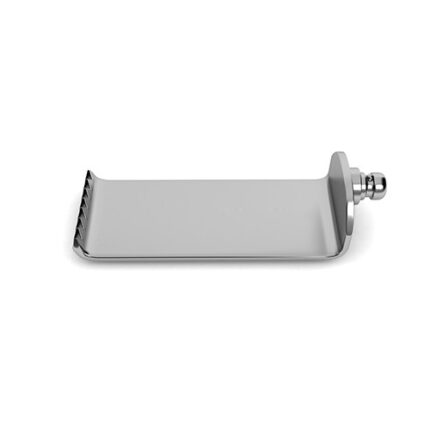
Cervical Retractor Lateral Blade
stainless steel, ball snap closure, w/ teeth Cervical Retractor Lateral Blade is an added component to be used alongside the cervical retractor for medial retraction. All five blades are made from stainless steel and a ball snap closure making them a tight fit. Each blade also features teeth that are variety in their size and curvature making it possible to find a suitable blade for soft tissue retraction in a number of neurosurgical scenarios and approaches to the spinal cord.
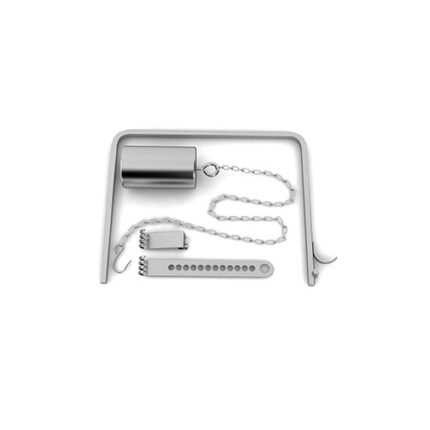
Charnley Initial Incision Retractor
standard pattern Charnley Initial Incision Retractor is a unique instrument specifically designed for use in retraction at the beginning of surgical intervention when the first incision is made. An ideal tool for a vase array of neurosurgical procedures because it securely open up the surgical field to give unobstructed access. This retractor set includes a frame, a long blade, short blade as well as a weight on a chain.

Reviews
There are no reviews yet.