
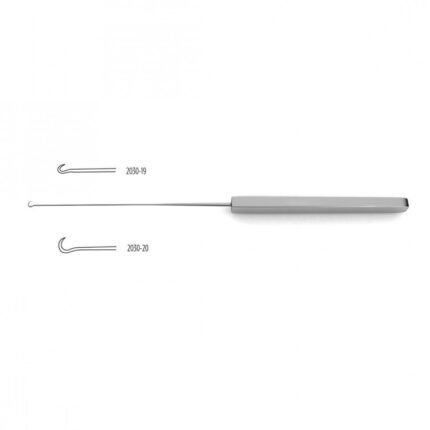
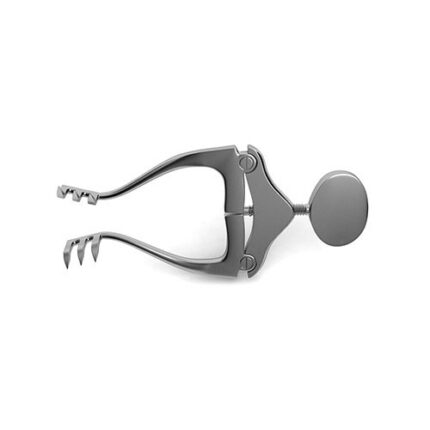
| Name | Hibbs Retractor |
| Lead Time | 0-3 days |
| Specialty | General Instruments-Hooks & Retractors – Retractors |
| Material Finish | Stainless Steel |
| Grade | Premium Operating Room |
| Units of Measurement | Each |
| Manufacturer | Ophthalmic Zone |
| Sterility | Non-Sterile |
| Usage | Reusable |
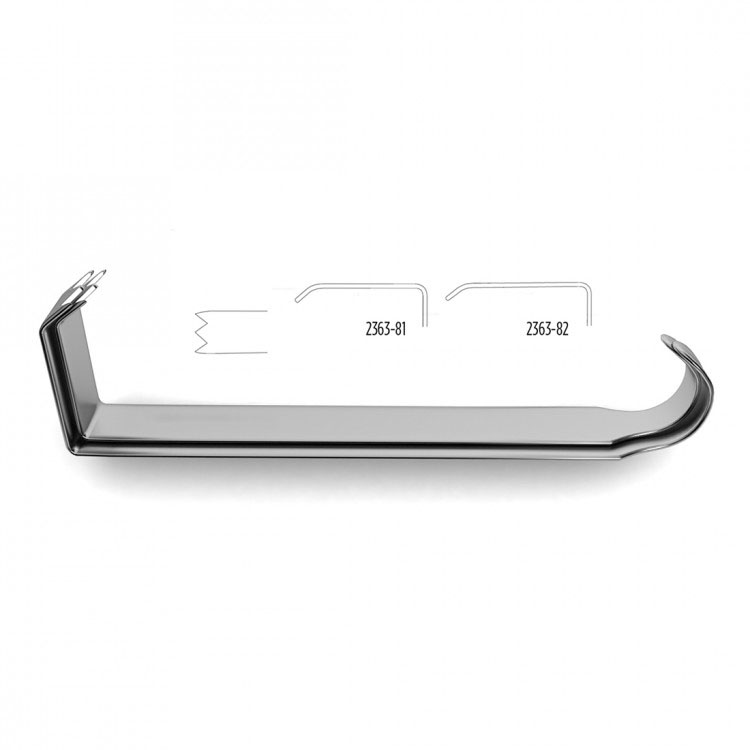
Hibbs Retractor
Hibbs Retractor
sharp teeth
Hibbs Retractor offers superior soft tissue retraction in deep areas of the body during cases where extensive tissue causes an obstructed view. This retractor is designed to provide a secure hold using either the sharp tooth end or the elegantly curved handle end, when more leverage is needed, and is available in two sizes for a wide range of patients. The deep curve ensures a clean operating field of vision and allows for greater freedom of manipulation during delicate procedures.
Description
Reviews (0)
Related products

Balfour Narrow Center Blade
Balfour Narrow Center Blade
for detachable balfour retractor systems
Balfour Narrow Center Blade consists of a flat blade on one end that is curved at a right angle. This blade also contains small lips on the edges to keep a large incision open. The handle of this instrument is fenestrated and has small loops that rods from lateral blades can fit onto in order to create the desired spread size.
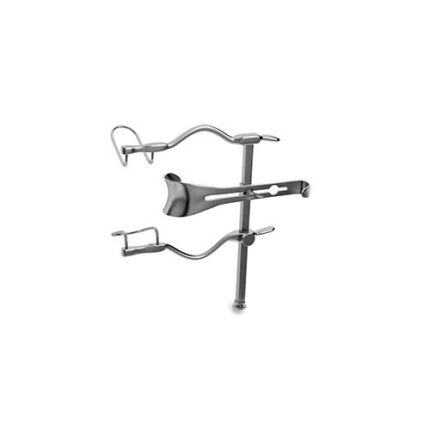
Balfour-Baby Pediatric Abdominal Retractor
Balfour-Baby Pediatric Abdominal Retractor
Balfour-Baby Pediatric Abdominal Retractor has a maximum spread of 3 ½," which is ideal for smaller patients, such as young children. This retractor system also includes fixed fenestrated side blades that help to spread open an incision and allow for adequate inspection of the abdominal cavity.
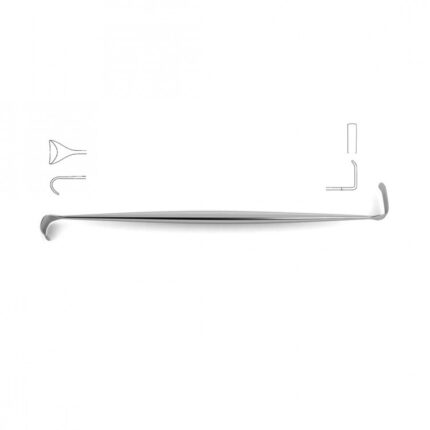
Cope Retractor
Double-ended, 6.0 mm & 11.0 mm, 7-1/8" (18.0 cm)
Cope Retractor is a double-ended surgical instrument primarily used to pull back skin or organs that may obstruct the operating area. The main features of this retractor are its different shaped blades. For example, one end contains a strongly curved blade with a lip. The other end, however, contains a sharp, right angle blade with a ridge on the tip.

Cottle Tenaculum
Cottle Tenaculum
angled, 6-1/4" (16.0 cm)
Cottle Tenaculum has a long, slim handle with a hook that tapers into an angled point. The primary use of this hook is to grasp or hold tissue away from the surgical site in order to provide the surgeon with greater visibility to the area. This instrument is offered in a 6 ¼" length.

Cushing Vein Retractor
Cushing Vein Retractor
Cushing Vein Retractor has a sharply curved blade and is a popular retractor used during neurosurgery or as rib spreaders. In this way, the ribs or the tissues that are held can be pulled and kept away from the surgical area. Depending on the situation, this instrument is available in different lengths and widths.
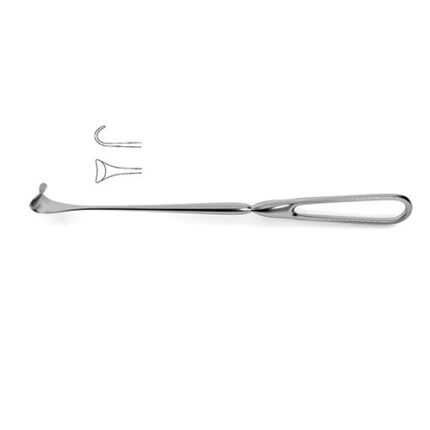
Cushing Vein Retractor – Fenestrated Handle
Cushing Vein Retractor - Fenestrated Handle
fenestrated handle
Cushing Vein Retractor is a more light-weight instrument due to its fenestrated handle. The lengths can range from 9" to 16." This vein retractor can be used during general surgeries to retract veins or other small tissues. It may also be used in other medical procedures such as neurosurgery to pull back tissue.
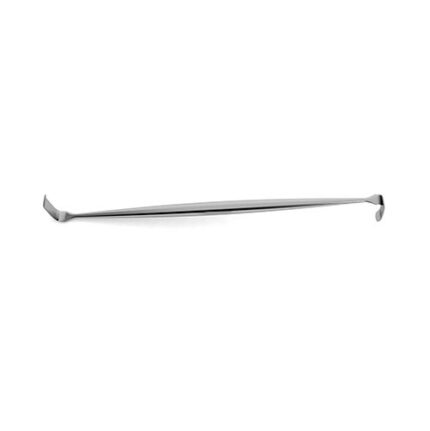
Davis Retractor
Double-ended, 5.0 mm x 16.0 mm & 8.0 mm x 21.0 mm blades, 5-1/2" (14.0 cm)
Davis Retractor is a stainless steel instrument that is double-ended and has opposing blades on either end. This retractor is able to divide and keep edges of an incision open. This instrument is also protected by the Ophthalmic Zone manufacturer warranty on defects in materials and workmanship.

Deaver Retractor – Flat Handle, Curved End
Deaver Retractor - Flat Handle, Curved End
flat handle, flexible, curved end
Deaver Retractor is flexible and includes a flat handle with a curved end. This uniquely shaped retractor allows the surgeon to have a more comfortable hold while positioning it during surgeries. These surgeries typically involve areas in the deep abdominal or chest cavity. The flexible nature of the slightly curved blade may help to prevent injury to the organs area being held. In order to accommodate certain cases, this instrument is offered in various blade widths and lengths.

Reviews
There are no reviews yet.