


| Name | Randolph Cyclodialysis Cannula |
| Lead Time | Lead time advised within 48 hours of order placement. |
| Competitor | ;OP0901252;OP0901-252;OP2070;K73620;K7-3620;E0504;601087;60-1087;6010-87;OP0901251;OP0901-251;601088;60-1088;6010-88;6010-87_6010-88; |
| Specialty | Ophthalmology-Cannulas |
| Material Finish | Stainless Steel |
| Grade | Premium Operating Room |
| Units of Measurement | Each |
| Manufacturer | Ophthalmic Zone |
| Sterility | Non-Sterile |
| Usage | Reusable |
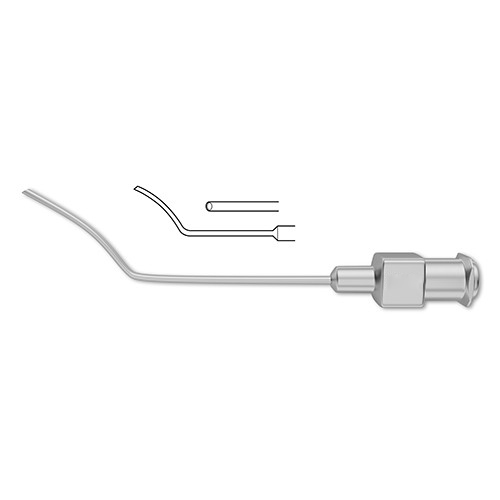
Randolph Cyclodialysis Cannula
front air injection port, 12.0 mm angled tip, 19-gauge Randolph Cyclodialysis Cannula is a commonly used tool in glaucoma procedures. The cannula is frequently used to irrigate the anterior chamber once a communication has been established between the anterior chamber and the suprachoroidial space. The cannula has a front injection air port and features a flat tip or thin spatula blade depending on surgical preference.
Description
Reviews (0)
Related products


Bracken Anterior Chamber Cannula
curved, 19-gauge, overall length excluding hub 13/16" (2.1 cm) Bracken Anterior Chamber Cannula is a frequently used tool in cataract extraction procedures. The small gauge cannula is nimble enough to fit into a small limbal incision accessing the anterior chamber. It may be used to aspirate fluid within the anterior chamber exposing the lens capsule. The curved nature of the shaft assures minimal surgical obstruction.
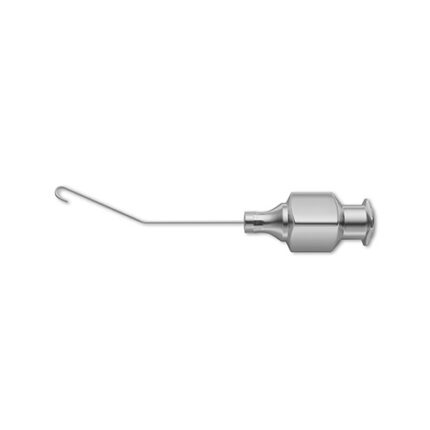
Gimbel Irrigating Cannula
30 gauge u-tip, overall length 28.0 mm (excluding hub)Gimbel Irrigating Cannula is a useful tool during cataract and IOL implantation procedures. The cannula may be used to perfuse fluid for easier manipulation of the IOL or easier access to debride nuclear fragments. The ultra-small gauge facilitates entrance into the lens capsule.
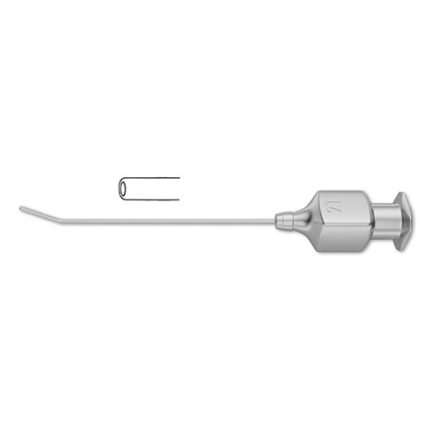
Healon Injection Cannula
flat tip, 21-gauge, overall length excluding hub 1-1/4" (3.0 cm) Gimbel Irrigating Cannula is a useful tool during cataract and IOL implantation procedures. The cannula may be used to perfuse fluid for easier manipulation of the IOL or easier access to debride nuclear fragments. The ultra-small gauge facilitates entrance into the lens capsule.
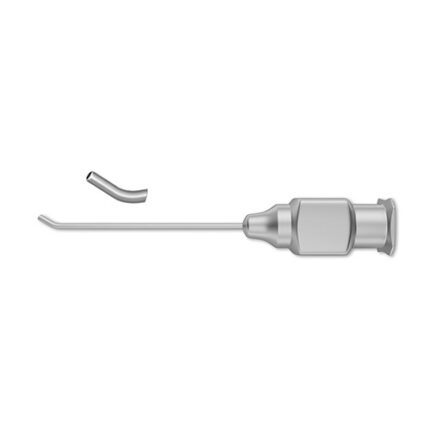
Knolle Anterior Chamber Irrigating Cannula
irrigating ports at 12, 10 & 2 o'clock, 23-gauge, overall length tip to hub 1-1/2" (3.8 cm) Knolle Anterior Chamber Cannula is a frequently used tool in cataract extraction procedures. The small gauge cannula with angled tip is nimble enough to fit into a small limbal incision accessing the anterior chamber. It may be used to aspirate fluid within the anterior chamber exposing the lens capsule.
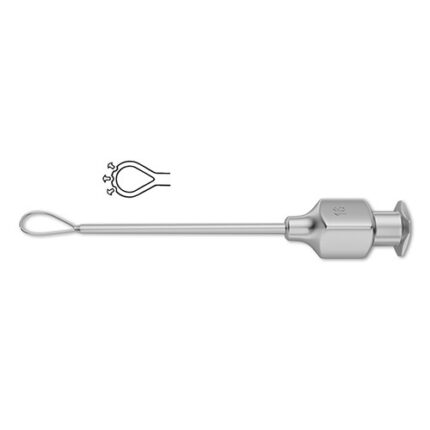
Knolle-Pearce Irrigating Lens Loop
1.0 mm tip, angled 30 degrees, sandblasted, 23-gauge, 3/4" (2.0 cm)Knolle-Pearce Irrigating Lens Loop is a useful tool for cataract and lens extraction procedures. The loop is instated between the nucleus and the posterior capsule; fluid is allowed to pass into this space to allow for easier removal of the lens. Three irrigation ports provide ample fluid distribution.

Lieppman Cystotome
w/ guard, 22-gauge, 2" (5.0 cm)Lieppman Cystotome is a commonly used tool during cataract phacoemulsification procedures. The cystotome may be used to create a circular incision in the anterior capsule before proceeding with aspiration of the lens. The tool features a guard to prevent extraneous damage to the surrounding iris or globe tissue.
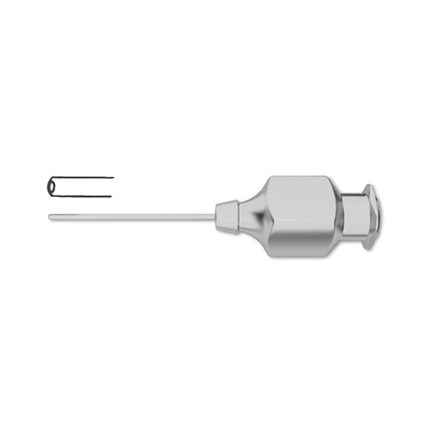
Scheie Anterior Chamber Cannula
blunt, 27-gauge, 3/4" (2.0 cm)Scheie Anterior Chamber Cannula is a frequently used tool in cataract extraction procedures. The small gauge cannula is nimble enough to fit into a small limbal incision accessing the anterior chamber. It may be used to aspirate fluid within the anterior chamber exposing the lens capsule.

Reviews
There are no reviews yet.