
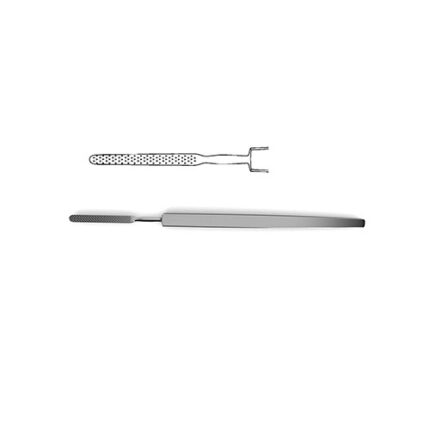
| Name | Bone File #10 |
| Lead Time | 0-3 days |
| Competitor | ;MO10056;772007;77-2007;7720-07; |
| Specialty | Neuro, Ortho & Spine-Rasps & Files |
| Material Finish | Stainless Steel |
| Grade | Premium Operating Room |
| Units of Measurement | Each |
| Manufacturer | Ophthalmic Zone |
| Sterility | Non-Sterile |
| Usage | Reusable |
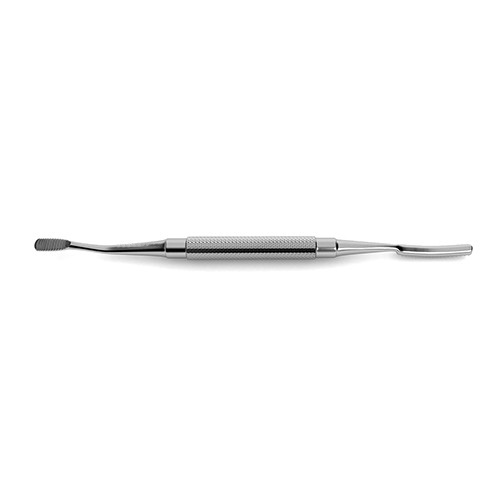
Bone File #10
double-ended, plain serrations, 5.0 mm wide ends, 7″ (17.5 cm) Bone File #10 is a general purpose instrument useful in surgical procedures that require manipulation of bone. This file is double ended making it quick and easy to switch to another unused file without having to switch instrumentation. Each end features plain serrations and is 5.0 mm wide. Additionally this instrument features a slightly textured handle surface that reduces slippage making this instrument ideally suited for a variety of precise neurosurgical procedures.
Description
Reviews (0)
Related products
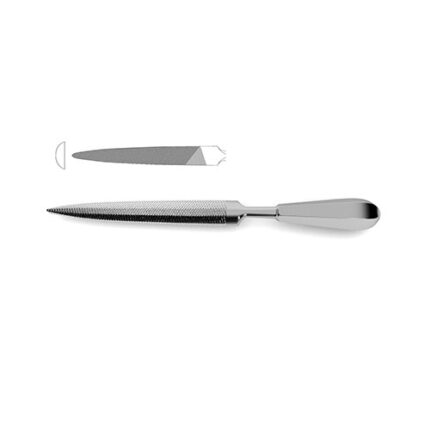
Bone File – Single-Ended
single-ended, 2-sided convex & flat blade, 23.0 mm width tapers to 6.0 mm, 11" (28.0 cm) Bone File is a ideally suited for many different surgical procedures. It is specifically designed to be used to file away at bone fragments that are caused by breaks or cuts or on coarse hard tissues in different parts of the body. They can be especially useful in neurosurgical and orthopedic procedures that can involve maneuvering and exploring around many different bony areas such as the skull, long bones and vertebral column. Additionally this file is single sided with a convex and flat blade and a 23.0 mm width that tapers to 6.0 mm.
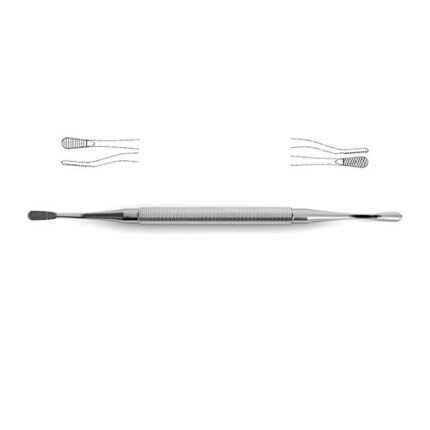
Bone File #12A
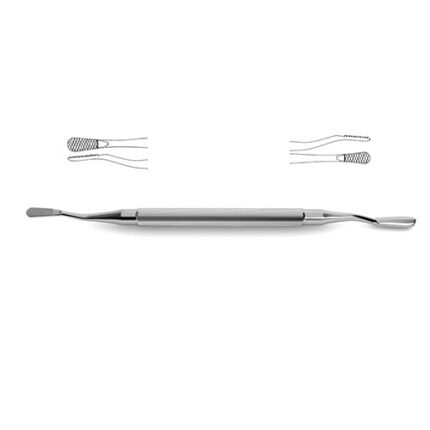
double-ended, one end plain, other end cross serrated, 5.0 mm wide ends, 7" (17.5 cm) Bone File #12A is a highly versatile file that can be used in surgical procedures that require manipulation of bone. It is ideally suit for some forms of bone reshaping such as a jagged edge that could endanger the tissue areas around it. In procedures such as craniotomies in which delicate brain tissue is being handled this file aids in keeping the bony area around smooth and free of harmful points. Additionally this instrument is double ended with one end plain and the other cross serrated making it a multi functional file.
Bone File #12Ca
double-ended, bell pattern, cross serrations, 5.0 mm & 7.0 mm wide ends, 7" (17.5 cm) Bone File #12CA is designed for use in manipulation of bone. This particular file is designed in a bell pattern and is double-ended making it a versatile instrument that can be useful in a vast array of settings. One end is 5.0 mm while the other is 7.0 mm and both features cross serrations. This file can be useful in doing this such as filing down bone when doing grafting procedures or simply to reduce the jaggedness of bone and other hard protuberances that may cause trauma to surrounding soft tissue layers of vasculature.

Bone File #45
double-ended, plain serrations, 6.0 mm & 5.0 mm wide ends, 7" (17.5 cm) Bone File #45 is an instrument crafted for use in neurosurgical orthopedic procedures. It features a hexagonal body that also serves as a grip that makes it easy to handle manually. This file is double ended and features plain serrations as well as two different sized ends: 6.0 mm and 5.0 mm. This instrument can be useful in surgical procedures that require filing or reshaping of bone particularly to prevent damage to surround tissue. Ideally it can be used to protect delicate brain tissue and neurovascular bundles from sharp jagged edges from breaks or from cuts made in surgery.
Bone File #92A
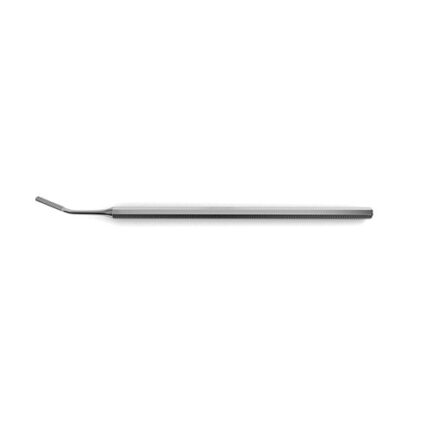
single-ended, 2.0 mm wide, file outside, backward cutting, angled w/ serrations, 6" (15.0 cm) Bone File is a highly versatile instrument that can be used in almost any neurosurgical orthopedic procedures. Ranging from craniotomies to spinal surgery this file can be used to file down any types of bone. This can be useful in smoothing down rough edges to prevent catching or tearing of delicate tissues or vasculature during surgical intervention. This instrument is single-ended with the file outside and is angled with serrations and can be used in backward cutting.

Gallaher Rasp
straight, coarse teeth, 6.5" (16.5 cm) Gallaher Rasp is ideally suited for use in shaping or whittling down bone and other hard tissue. It can aid in prevention of further trauma or injury to soft tissue layers such as brain in craniotomies or to the spinal cord or neurovascular bundles in laminectomies. A unique feature of this rasp is the additional loop affixed to the base of the handle for placement of the thumb for added grip and maneuvering. Additionally this rasp is straight and features coarse teeth.
Nail & Bone Rasp
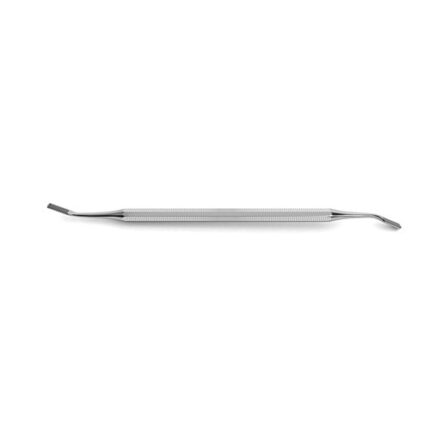
double ended, backwards cutting, 6-3/4" (17.1 cm) Nail and Bone Rasp is ideal for a number of different neurosurgical orthopedic type surgeries. This rasp is double ended making it a two in one and can quickly switch between thw two heads. It has the ability to be backwards cutting. This instrument features serrations that allow either end to be used to whittle down or smooth roughened surfaces. In craniotomies or spinal surgeries such jagged edges can cause tearing on delicate tissue such as brain tissue or individual nerves and vasculature.

Putti Bone Rasp – Round Blades
round blades, double-ended, 1 10.0 mm round blade tapers to 4.0 mm & 1 15.0 mm half-round blade tapers to 5.0 mm, 12" (30.5 cm) Putti Bone Rasp is an instrument ideally suited for use in surgeries that require handling and particularly mild reshaping of bone such as in neurosurgical or orthopedic surgeries. . This instrument is double ended and features one round blade and another half round. The unique design of this rasp is in the leap shaped silhouette that tapers from 11.0 mm to 4.0 mm for the round blade and from 15.0 mm to 5.0 for the half round that allows it to be fit into slim and narrow spaces and effectively whittle down bone or hard tissue from any angle.

Reviews
There are no reviews yet.