
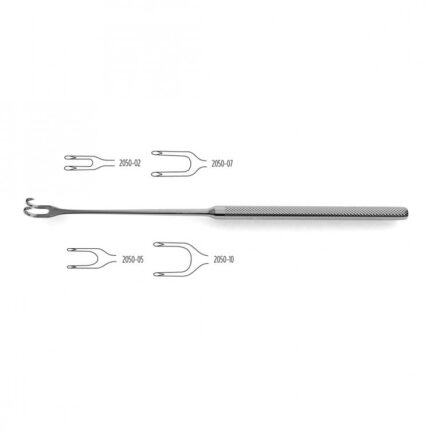
| Name | Kelly Retractor – Grip Handle |
| Lead Time | 0-3 days |
| Specialty | General Instruments-Hooks & Retractors – Retractors |
| Material Finish | Stainless Steel |
| Grade | Premium Operating Room |
| Units of Measurement | Each |
| Manufacturer | Ophthalmic Zone |
| Sterility | Non-Sterile |
| Usage | Reusable |
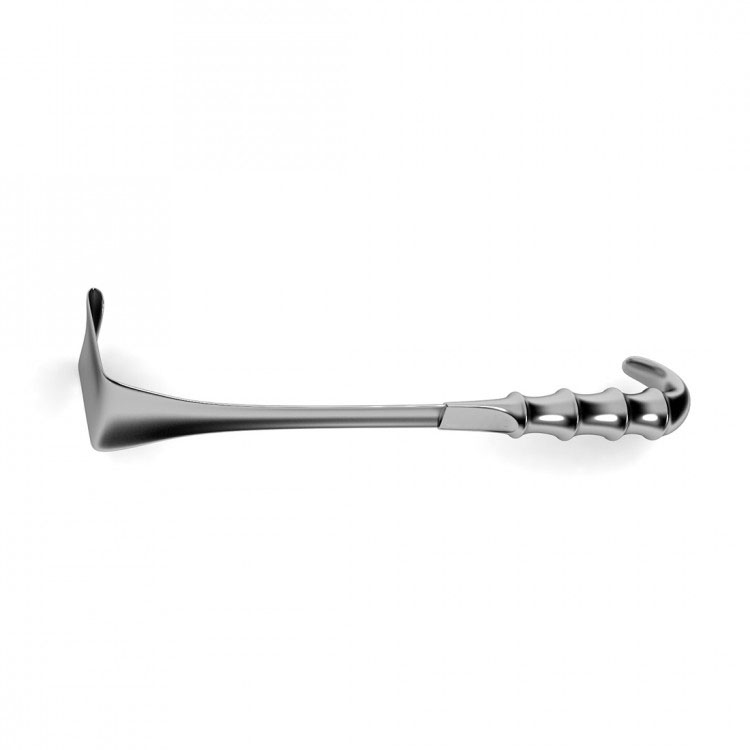
Kelly Retractor – Grip Handle
Kelly Retractor – Grip Handle
grip handle, 10-1/4″ (26.0 cm)
Kelly Retractor contains a grip style handle and is a popular instrument used during surgeries such as rectal dissection. This retractor can be obtained in numerous blade styles to satisfy an assortment of surgical needs.
Description
Reviews (0)
Related products

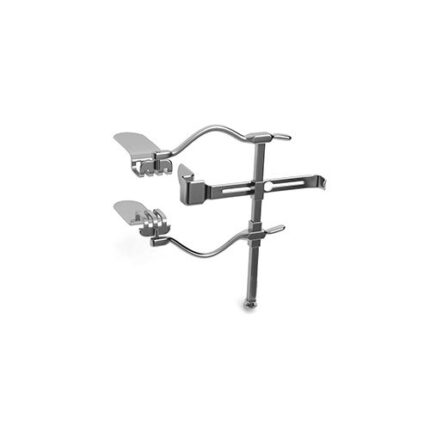
Balfour Abdominal Retractor W/ Fixed Side Blades
w/ ratchet bar mechanism, w/ fixed fenestrated side blades, 7-1/8" (18.1 cm) maximum spread
Balfour Abdominal Retractor with Fixed Side Blades contains a ratchet bar mechanism and side blades that are fenestrated. These side blades are designed to push apart an incision while the ratchet holds the instrument in position. The solid center blade, however, can be lowered or raised to provide better visibility for the surgeon.

Balfour Abdominal Retractor W/ Fixed Side Blades – 4″ Deep
w/ fixed fenestrated side blades, 4" deep & center blade #2470-73 (3-3/8" x 2-1/2")
Balfour Abdominal Retractor with Fixed Side Blades contains fenestrated side blades that are fixed onto the instrument. This retractor is primarily used during surgeries in which large abdominal incisions need to be held open to provide more visibility to the surgeon. Moreover, the instrument is offered in different sized spreads to accommodate different patients.

Balfour Narrow Center Blade
Balfour Narrow Center Blade
for detachable balfour retractor systems
Balfour Narrow Center Blade consists of a flat blade on one end that is curved at a right angle. This blade also contains small lips on the edges to keep a large incision open. The handle of this instrument is fenestrated and has small loops that rods from lateral blades can fit onto in order to create the desired spread size.
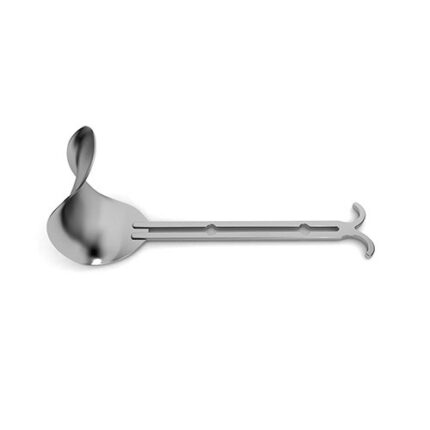
Balfour Standard Center Blade – For Fixed System
For balfour retractor systems w/ fixed side blades
Balfour Supra-Pubic Center Blade is available in different sizes to accommodate different surgical procedures and patients. The blade is curved and has lips around the edges to assist in operations such as a Suprapubic Cystostomy. This center blade may also be detached when used with the Balfour Retractor Systems.
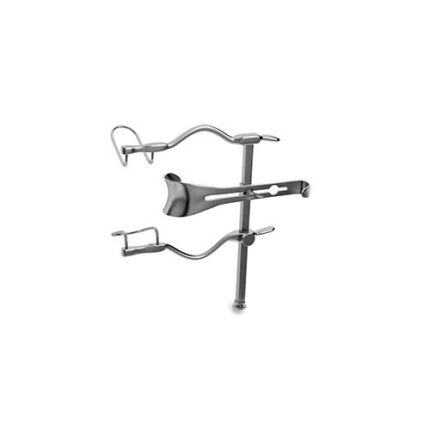
Balfour-Baby Pediatric Abdominal Retractor
Balfour-Baby Pediatric Abdominal Retractor
Balfour-Baby Pediatric Abdominal Retractor has a maximum spread of 3 ½," which is ideal for smaller patients, such as young children. This retractor system also includes fixed fenestrated side blades that help to spread open an incision and allow for adequate inspection of the abdominal cavity.
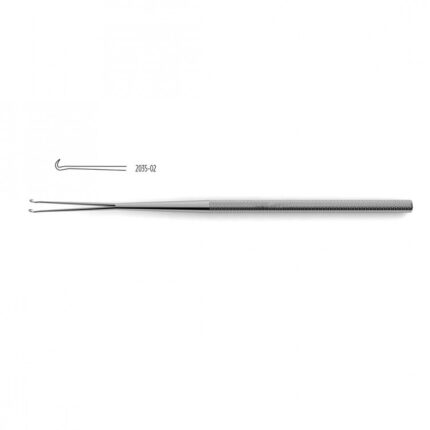
Barsky Skin Hook
Knurled handle, 6" (15.2 cm), sharp
Barsky Skin Hook can be used in various medical procedures where skin or soft tissue needs to be maneuvered, such as procedures involving plastic surgery or ophthalmology. The knurled handle contributes to a better grip for the surgeon, and the hook at the end contains a sharp prong that can be single or double. The high quality stainless steel used to produce this instrument may help to prevent bacteria from adhering to its surface during an operation.
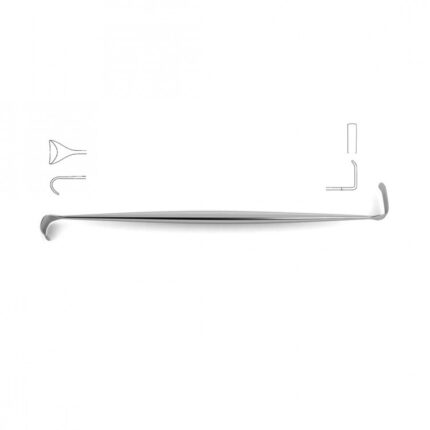
Cope Retractor
Double-ended, 6.0 mm & 11.0 mm, 7-1/8" (18.0 cm)
Cope Retractor is a double-ended surgical instrument primarily used to pull back skin or organs that may obstruct the operating area. The main features of this retractor are its different shaped blades. For example, one end contains a strongly curved blade with a lip. The other end, however, contains a sharp, right angle blade with a ridge on the tip.

Cottle Tenaculum
Cottle Tenaculum
angled, 6-1/4" (16.0 cm)
Cottle Tenaculum has a long, slim handle with a hook that tapers into an angled point. The primary use of this hook is to grasp or hold tissue away from the surgical site in order to provide the surgeon with greater visibility to the area. This instrument is offered in a 6 ¼" length.

Reviews
There are no reviews yet.